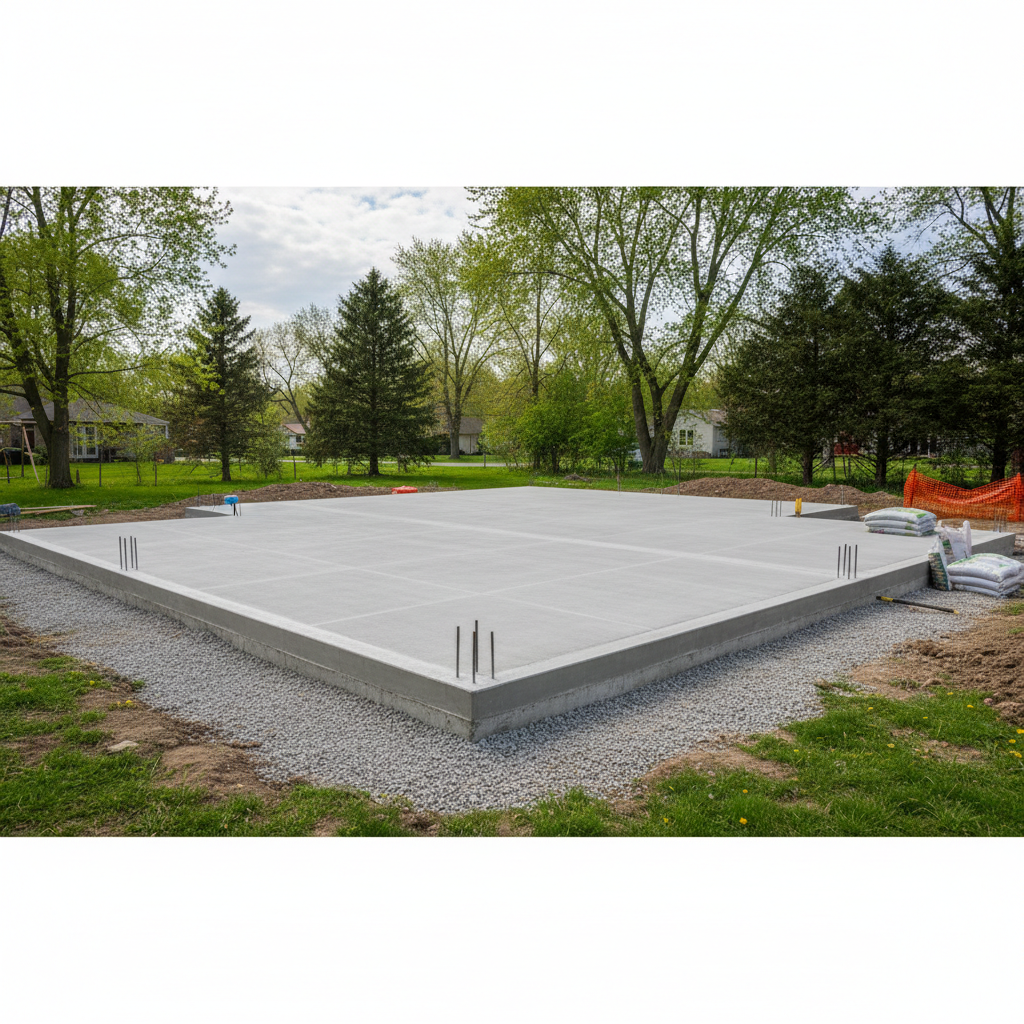
You're planning a new garage, an addition, or maybe a shed, and that means a concrete foundation. Good for you for thinking ahead! But before you jump in, let's talk about some of the biggest slip-ups I see homeowners make around Schaumburg when they're tackling these kinds of projects. Trust me, avoiding these can save you a ton of headache, time, and money down the road.
Mistake #1: Skipping Proper Site Prep
This is a big one, and it's where a lot of problems start. People think, "It's just dirt, how hard can it be?" Well, it's not just dirt. It's about making sure that ground is stable and ready to hold thousands of pounds of concrete and whatever you're building on top of it. I've seen folks try to pour over old tree roots, uncompacted fill dirt, or even areas where drainage is clearly an issue. You can't just slap concrete on top of a problem and expect it to go away. It'll come back to haunt you, usually in the form of cracks, settling, or even structural damage to your new building.
A good contractor, like us at Absolute Concrete Co, will make sure the site is properly excavated, graded, and compacted. We're talking about removing organic material, bringing in the right type of aggregate if needed, and compacting it in lifts. Especially with the clay soils we have around here in Schaumburg, proper compaction is non-negotiable. If your contractor isn't talking about site prep in detail, that's a red flag.
Mistake #2: Not Understanding Drainage
Water is concrete's worst enemy, especially when it's allowed to sit around the foundation. People often focus on the slab itself but forget how water will behave around it. You need to think about how rainwater will flow away from your foundation. Is the ground sloped correctly? Are there gutters on your new structure that will direct water away? Is there proper backfill around the foundation walls?
I've seen foundations poured where the surrounding grade slopes *towards* the building. That's just asking for trouble – hydrostatic pressure, water intrusion, and eventually, foundation damage. Make sure your plan includes a clear strategy for managing water. It's not just about keeping your basement dry; it's about protecting the integrity of the concrete itself.
Mistake #3: Going Too Cheap on Materials or Reinforcement
Everybody wants to save a buck, I get it. But a concrete foundation is not the place to cut corners. Some homeowners, or even some less scrupulous contractors, will try to save money by using lower-grade concrete mixes or skimping on reinforcement. They might use less rebar, smaller diameter rebar, or space it too far apart. Or they might skip vapor barriers or insulation where they're really needed.
Reinforcement, like rebar or wire mesh, isn't there to prevent concrete from cracking entirely – concrete cracks, it's a fact of life. But it *does* help control where those cracks go and keeps the slab together, maintaining its structural integrity. A proper concrete mix with the right strength (psi) for your application, combined with adequate reinforcement, is crucial. Don't let anyone convince you that less is more when it comes to your foundation's bones.
Mistake #4: Ignoring Permits and Codes
This one's a classic. "It's just a small shed, I don't need a permit." Or "My buddy can do it on the side, no paperwork." Wrong. Almost any new concrete foundation work, especially for a structure, requires a permit from the Village of Schaumburg. These permits aren't just bureaucracy; they ensure that the work meets safety standards and local building codes. An inspector will come out to check things like excavation depth, reinforcement placement, and concrete quality before the pour.
If you skip the permit, you could face fines, be forced to tear out the work, or have trouble selling your home down the line. Plus, if something goes wrong, your insurance might not cover it if the work wasn't permitted. A reputable contractor will always pull the necessary permits and schedule inspections. If they tell you it's not needed or suggest you pull it yourself, be very wary.
Look, a concrete foundation is a big investment. It's literally the base for whatever you're building. Doing it right the first time means peace of mind and a structure that lasts. Don't fall into these traps. Ask questions, demand proper practices, and work with professionals who know their stuff. Your future self will thank you.