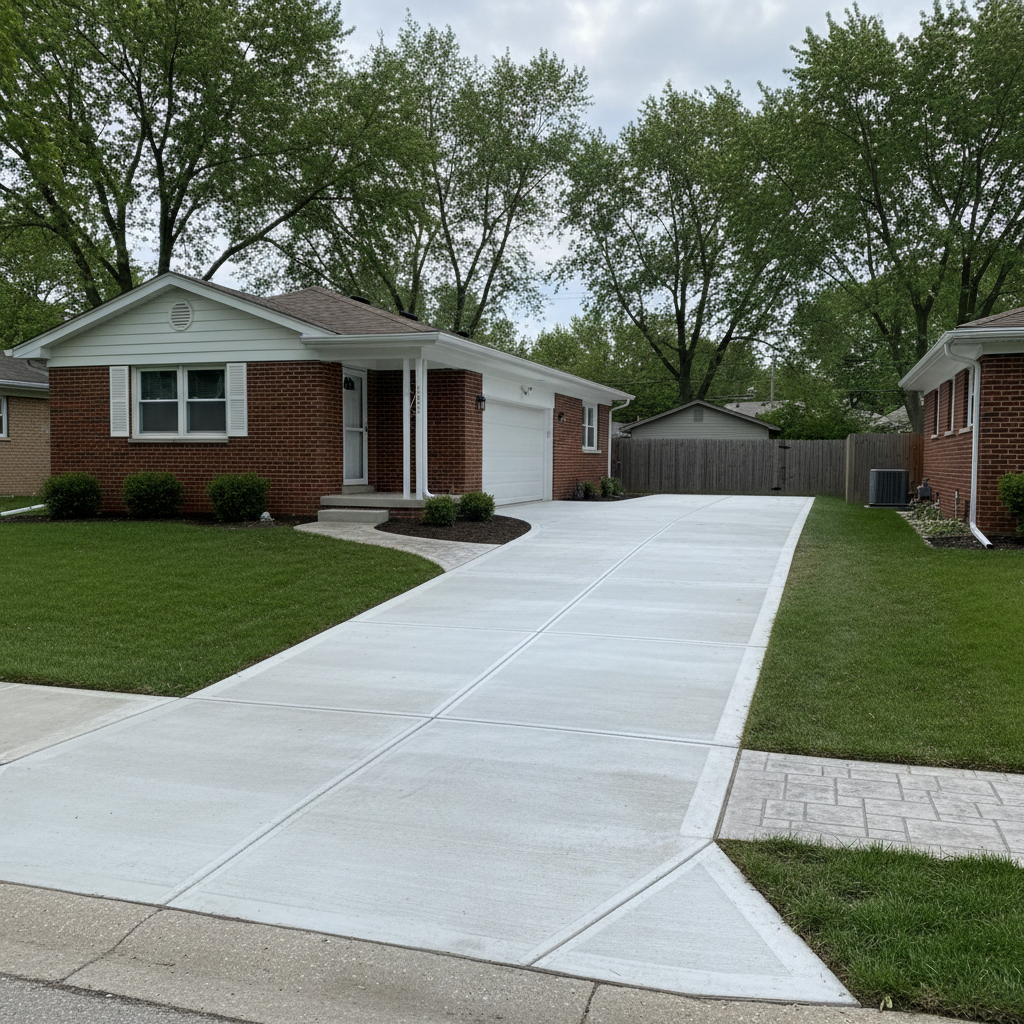
Alright, let's talk about concrete flatwork costs here in Schaumburg. I get calls every day from folks wanting to know what a new driveway, patio, or walkway is going to set them back. And look, it's not as simple as a flat rate per square foot, no matter what some online calculators tell you. There are a bunch of things that push the price up or down, and if you don't understand them, you might end up paying too much or getting a crummy job.
What Really Affects Your Concrete Flatwork Price?
When I'm putting together a quote for a new concrete slab, I'm looking at a few key things. These aren't just arbitrary numbers; they're real costs we face on every job.
- Size and Complexity: This is a big one. A simple, rectangular 10x10 patio is way easier and cheaper per square foot than a winding walkway with curves and multiple levels. More cuts, more forming, more labor.
- Thickness of the Slab: Standard driveways are usually 4 inches thick, but if you're parking an RV or heavy equipment, you might need 6 inches. That's a lot more concrete and more rebar, which costs more.
- Site Preparation: This is often where the real work happens. Is it a clean slate, or do we have to tear out an old cracked concrete slab or a crumbling asphalt driveway? Demolition, hauling away debris, and proper grading all add to the cost. If your yard has soft, clay-heavy soil—common in some older Schaumburg neighborhoods like those around the Spring Valley Nature Center—we might need to bring in extra gravel for a stable sub-base. That's extra material and labor, you know?
- Reinforcement: Are we using wire mesh, rebar, or both? Rebar costs more but gives you a much stronger, crack-resistant slab, especially for driveways or heavy-traffic areas. I always recommend it for driveways; it's cheap insurance against future headaches.
- Finish Type: A standard broom finish is the most economical. But if you want something decorative like stamped concrete, exposed aggregate, or a colored finish, those are specialized techniques. They need more skilled labor and specific materials, so they'll cost more.
- Accessibility: Can our concrete truck easily back right up to the pour site, or do we need to wheelbarrow everything around the back of your house? If we need pumps or extra labor for hard-to-reach areas, that's going to factor into the price.
- Permits: For larger projects like driveways or significant patios, Schaumburg usually requires permits. We handle that for you, but the permit fees themselves are an added cost.
Typical Cost Ranges for Schaumburg Flatwork (2024)
Okay, I know you want numbers, so here's what I'm seeing for typical concrete flatwork projects around Schaumburg. Remember, these are ranges, and your specific job could be higher or lower depending on those factors I just mentioned.
- Basic Broom Finish (4-inch thick, good sub-base, easy access): You're generally looking at $8 to $12 per square foot. This is for a straightforward driveway, sidewalk, or patio.
- Reinforced Driveways (4-inch thick with rebar, broom finish): Expect to pay $10 to $15 per square foot. The rebar adds durability, which is really worth it for a driveway.
- Decorative Finishes (Stamped, Exposed Aggregate, Colored): These can jump up to $15 to $25+ per square foot, sometimes even more for really intricate patterns or multiple colors. The skill and materials needed are just different.
- Small Repair/Replacement Jobs (e.g., a single sidewalk square): For small jobs under 100 sq ft, the per-square-foot cost will be higher because there's a minimum cost for mobilization, setup, and cleanup. You might pay $1,000 to $2,500 just for a small section, even if the square footage cost seems high.
So, for a standard 500 sq ft driveway, you might be looking at $5,000 to $7,500. A 200 sq ft patio could be $1,600 to $3,000 for a basic finish, or $3,000 to $5,000+ for something stamped.
What Should Be Included in a Concrete Quote?
When you get a quote from Absolute Concrete Co., or any other reputable contractor, it should be detailed. Don't accept a one-line email with a total number. You need to know what you're paying for.
- Scope of Work: Exactly what's being done. Dimensions, thickness, type of finish.
- Site Preparation: Demolition (if any), excavation, grading, sub-base material.
- Materials: Concrete strength (e.g., 4000 PSI), reinforcement (mesh, rebar), any color or stamping materials.
- Labor: Cost for forming, pouring, finishing, and cleanup.
- Permits: Who's responsible for pulling them and the cost.
- Disposal Fees: For old concrete or dirt.
- Warranty: What kind of guarantee do they offer on their work?
If any of this is missing, ask questions. A good contractor won't mind explaining everything.
How to Avoid Overpaying for Concrete Flatwork
Nobody wants to get ripped off, especially on a big home improvement project. Here's my advice:
- Get Multiple Bids: Three quotes is usually a good number. Make sure they're quoting on the exact same scope of work so you can compare apples to apples.
- Check References and Reviews: Don't just go with the cheapest guy. Look at their past work, talk to previous customers. Absolute Concrete Co. has built its reputation on quality for a reason.
- Understand the Details: As I said, know what's in the quote. If one quote is significantly lower, find out why. Are they skipping rebar? Using a cheaper sub-base? Not pulling permits? Those shortcuts will cost you more in the long run.
- Don't Pay Upfront: A reputable contractor will ask for a deposit, usually 30-50%, but never the whole thing upfront. Final payment is typically due upon satisfactory completion.
- Be Clear About Expectations: Make sure you and the contractor are on the same page about the finished product, including drainage, expansion joints, and the overall look.
Doing your homework now will save you a lot of grief and money down the road. A quality concrete job should last for decades, so it's an investment worth getting right.