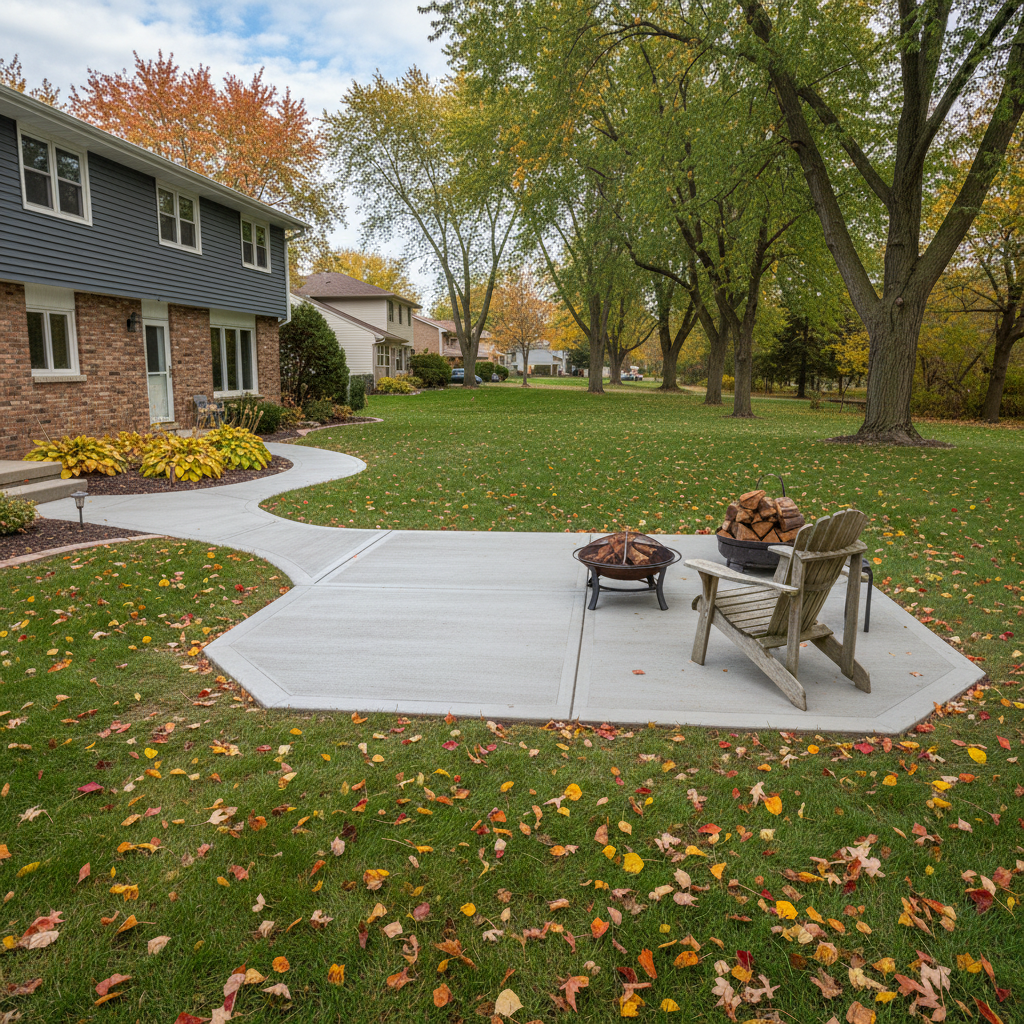
Alright, let's talk concrete. You're probably thinking about a new driveway, maybe a patio, or even a walkway around your Schaumburg place. That's fantastic! But before we dive into colors and cool patterns, we really need to chat about timing. See, here in Schaumburg, our weather isn't exactly a straight shooter, and that makes a huge difference when you're working with concrete.
When to Schedule Your Concrete Project
This is probably the question I hear most often. Everyone wants their new concrete yesterday, right? But good work needs good conditions. For us, the sweet spot for pouring concrete usually falls in the spring, late summer, and early fall. Think April through June, and then September through October. Why those times, you ask?
Spring (April-June): This is prime time, no doubt about it. The ground has finally thawed out, temperatures are pretty reliably above freezing, and we're usually past the worst of that heavy winter snowmelt. The concrete gets a chance to cure properly without getting shocked by extreme heat or sudden cold. We're looking for daytime temperatures consistently in the 50s, 60s, and 70s. And nights shouldn't be dipping too far below freezing, either.
Summer (July-August): You *can* pour concrete in the summer, but it's definitely trickier. If it gets too hot, especially on those 90-degree days we often see, the concrete can dry out way too fast. That often leads to cracking, poor strength, and just a generally weaker slab. We can take steps to fight this – adding retarders to the mix, keeping it wet, pouring super early in the morning – but it's always a bit more of a challenge. If you're on a tight schedule and summer's your only shot, we can certainly make it happen, but you'll need to be extra diligent about curing.
Fall (September-October): Another fantastic window, honestly. The ground is still nice and warm from summer, but that scorching heat is finally gone. We get those lovely, mild days that are just perfect for curing. The only real thing to watch out for is an early cold snap. Once nighttime temperatures consistently drop below freezing, we're really pushing our luck. You absolutely don't want your fresh concrete freezing before it's had a chance to gain strength.
Winter (November-March): Just forget about it. Seriously. Unless it's an emergency repair or a very specific indoor project, we simply don't pour concrete outside in winter. The ground is frozen solid, the water in the mix will freeze, expand, and destroy the concrete before it even sets. It's a recipe for disaster, and any contractor who tells you otherwise is probably cutting corners. We do plenty of other work in the winter, of course, but pouring new exterior flatwork isn't one of them.
Weather Conditions That Affect the Work
It's not just about the season, you know; it's also about the day-to-day conditions. I've seen plenty of projects get delayed because of unexpected weather, even when we're in the so-called "prime season."
Rain: A light drizzle isn't the end of the world for a concrete pour, but heavy rain during or right after is a real problem. It can wash away the cement paste, weaken the surface, and leave you with a soft, pitted finish. We're always watching the forecast like a hawk, believe me. If there's a good chance of heavy rain, we'll reschedule. It's always better to wait a day or two than to have to tear out and redo a whole slab, wouldn't you agree?
Wind: High winds can also be an issue, especially on hot days. Wind speeds up evaporation from the surface of the concrete, which can lead to plastic shrinkage cracks. We'll often use windbreaks or apply curing compounds sooner if it's a particularly windy day.
Temperature Swings: Our Illinois weather is famous for this, isn't it? A 70-degree day followed by a 30-degree night. This is precisely why proper curing is so important. Rapid temperature changes can stress the concrete, especially in its early stages. We'll use blankets or other coverings if a cold night is expected after a pour.
Protecting Your Concrete Investment Year-Round
Once your new concrete is in, you want it to last, right? Here's how you protect it from our Schaumburg climate:
1. Curing is Key: This starts right after we pour the concrete. We'll talk about keeping it wet for the first few days or applying a special curing compound. Don't walk on it too soon, and definitely don't drive on it for at least a week – sometimes longer, depending on the mix and conditions. We'll give you specific instructions for your project.
2. Seal It: After about 28 days (that's when it's fully cured), you really should seal your concrete. A good quality penetrating sealer will protect it from water absorption, those brutal freeze-thaw cycles, and de-icing salts. This is especially important for driveways. I recommend re-sealing every 2-3 years, or more often if it sees heavy use or harsh winter conditions.
3. Be Smart with De-Icers: This is a big one, folks. Try to avoid rock salt (sodium chloride) if you can. It's incredibly harsh on concrete. Calcium chloride or magnesium chloride are better options, but even those should be used sparingly. Sand is always a good, non-damaging alternative for traction. If you've got a new slab, especially in its first winter, try to avoid de-icers altogether if possible. The first winter is its most vulnerable time.
4. Clear Snow Promptly: Don't let snow and ice just sit on your concrete for extended periods. The constant freeze-thaw cycles and trapped moisture can really speed up deterioration. Get out there with your shovel or snowblower and clear it off.
5. Watch for Standing Water: Make absolutely sure your concrete has proper drainage. If water pools on your patio or driveway, it's going to find its way into the concrete, freeze, expand, and cause damage over time. We always design for proper slope, but sometimes things settle or get blocked.
Look, concrete is tough stuff, but it's not indestructible, especially with the kind of winters we get here in Schaumburg. From the heavy clay soils that can shift under foundations to the brutal freeze-thaw cycles, our local conditions demand real attention to detail. Absolute Concrete Co. has been doing this for a long time, and we know what works and what doesn't. Plan ahead, take care of your investment, and your concrete will serve you well for decades.