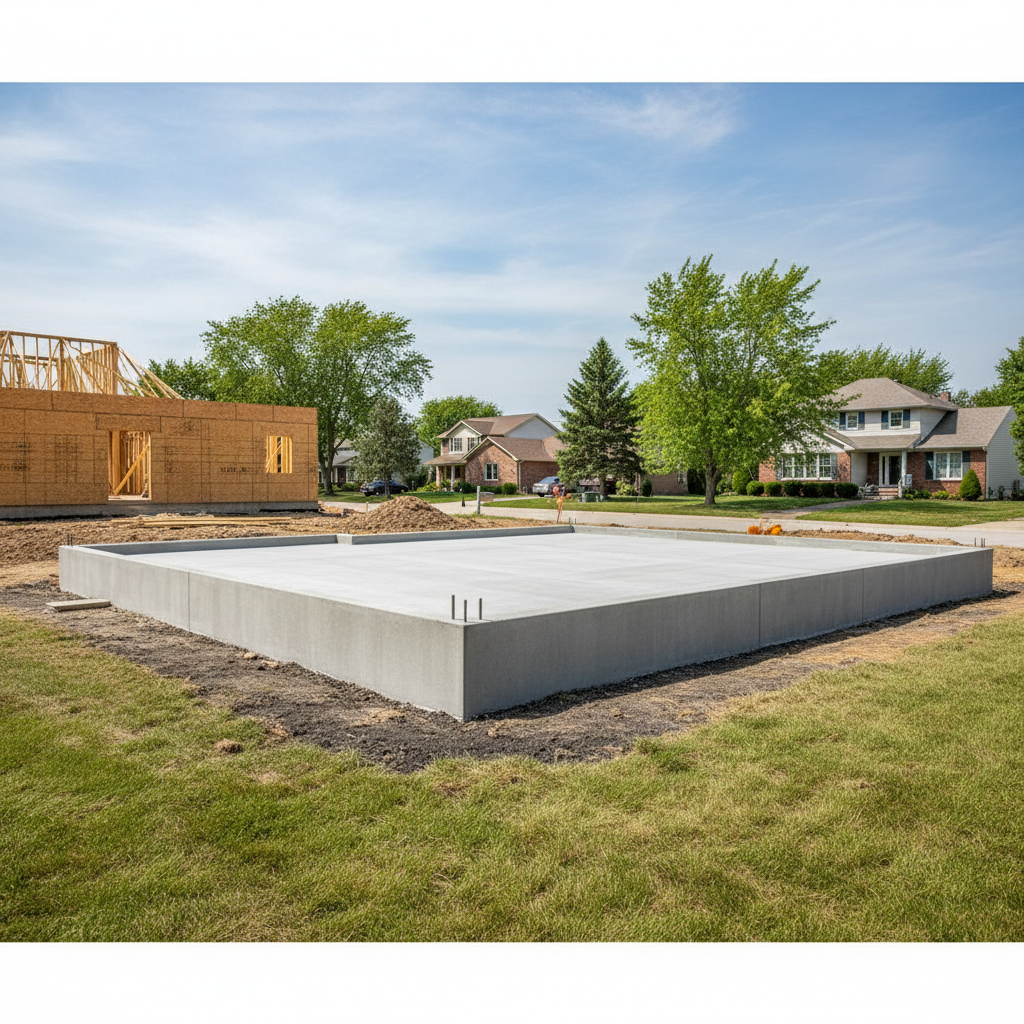
Ever wonder why some foundations seem to last forever, and others start cracking up after just a few years? It's not always about the concrete mix itself, though that's a big part of it. A lot of it comes down to understanding where you're building, and that's especially true right here in Schaumburg.
I've been pouring and repairing foundations around here for a long time, and I can tell you, what works in, say, Arizona, isn't going to cut it in Illinois. We've got our own set of challenges. If your contractor doesn't get that, you're looking at potential headaches down the road, believe me.
The Clay Problem: Our Local Foundation Foe
One of the biggest things we deal with in Schaumburg, and much of Chicagoland, is our soil. We're sitting on a lot of expansive clay. What does that mean? It means when it's wet—like after a heavy spring rain or a big snowmelt—that clay soaks up water and swells. Then, when it dries out, say during a hot, dry summer, it shrinks. This constant expansion and contraction puts a ton of stress on a foundation.
Think about it: your house is sitting on something that's constantly moving, even if it's just a little bit. If your foundation isn't designed and poured to handle that movement, you're going to see cracks. Not just hairline surface cracks, which are often cosmetic, but structural ones. These can lead to bigger problems like water getting in or uneven floors.
I've seen it happen in older homes in the Weathersfield neighborhood, where some of those original foundations just weren't built with today's understanding of soil mechanics. But even new builds can have issues if the contractor isn't paying attention to proper site prep and drainage.
Drainage: Your Foundation's Best Friend
Speaking of drainage, this is absolutely critical. You can have the best concrete foundation in the world, but if water is constantly pooling around it, you're asking for trouble. Water is relentless. It'll find its way into any tiny crack, and over time, it'll erode the soil around your foundation, which leads to settlement.
We always make sure to grade the site properly so water flows away from the house. That means a slight slope away from the foundation walls for at least ten feet. And don't forget about gutters and downspouts! They need to discharge water well away from the foundation too. It sounds simple, but you'd be surprised how many issues I trace back to poorly managed rainwater.
Frost Heave: The Winter Warrior
Then there's winter. Oh, our beautiful Illinois winters. When the ground freezes, any moisture in the soil turns to ice, and ice expands. This is called frost heave, and it can literally lift parts of your foundation. When the ground thaws, it settles back down. This freeze-thaw cycle, year after year, puts immense pressure on your foundation walls.
That's why building codes here require foundations to be dug below the frost line, which is typically 42 inches deep in our area. If a contractor tries to cut corners and digs a shallower footing, you're setting yourself up for serious structural damage. It's not just about getting the concrete in the ground; it's about getting it deep enough to be stable through our crazy temperature swings.
Common Schaumburg Foundation Projects
What kind of foundation work do we usually see here? Well, it's a mix. We do a lot of new home foundations, obviously, especially with new developments popping up. But we also do a fair bit of foundation repair on older homes. Sometimes it's just patching cracks, other times it's more involved, like installing piers or underpinning to stabilize a settling foundation.
Basement additions are also popular. People want more space, and often that means extending the existing foundation or building a new one for a sunroom or an expanded living area. For these projects, matching the new work to the existing structure and making sure everything integrates smoothly is key. You definitely don't want a new addition settling differently than the original house.
Why Local Expertise Matters
This is where a local company like Absolute Concrete Co. really makes a difference. We're not just pouring concrete; we're building for Schaumburg. We understand the specific soil conditions, the local building codes, and the weather patterns that impact foundations here. We know what works and what doesn't because we've seen it all, right here in our community.
When you're dealing with something as critical as your home's foundation, you don't want a contractor who's just guessing. You want someone who knows the lay of the land, literally and figuratively. We're here to make sure your foundation is solid, stable, and built to last through everything our Illinois climate can throw at it. It's about knowing that the very base of your home is in good hands.